CP3 · SPARTA LAB · S-CUBE LAB · UNIVERSITY OF IOWA

Sarmad Chandio

سرمد

On platforms, people, and the algorithms between them.

Sarmad Chandio

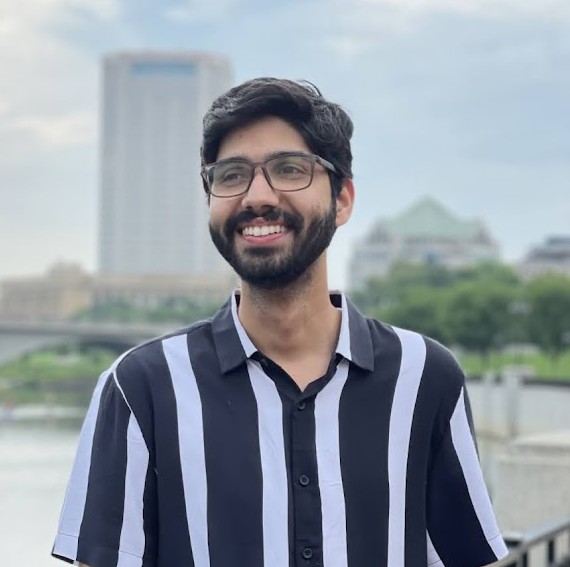
Hi! I am Sarmad, a fifth-year PhD student at the University of Iowa advised by Dr. Rishab Nithyanand. I am a member of the Center for Publics, Platforms & Personalization and a research assistant at the SPARTA lab.

Using computational social science techniques, I study how social media platforms affect user ideologies — developing methods to identify bias propagation through recommendation systems and measure how this bias shapes user opinions.

Section I

Research

Computational social science · platforms, ideologies, audits


ICWSM ’26

Examining the Role of YouTube Production and Consumption Dynamics on the Formation of Extreme Ideologies

Sarmad Chandio, Rishab Nithyanand

A longitudinal, mixed-methods analysis combining one year of YouTube watch history with two waves of ideological surveys from 1,100 U.S. participants. We identify users who exhibited significant shifts toward more extreme ideologies and compare their content consumption and the production patterns of the channels they engaged with to ideologically stable users. Users who shifted toward extremism were immersed in a distinct media ecosystem characterized by significantly higher levels of anger and grievance.

ICWSM ’26

Flattening Fantasies: Analyzing Stereotypes in Pornographic Discourse

Sarmad Chandio*, Osama Khalid*, Sharaf Zia, Ethan Kutlu  (*equal contributors)

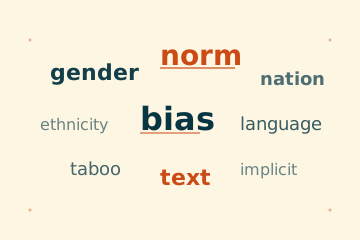
A large-scale quantitative text analysis on a dataset of 5.4 million video titles to uncover sociolinguistic patterns and implicit biases. We investigate how nationalities, ethnic groups, and gender identities are portrayed in pornographic discourse, focusing on stereotypes and deviations from implicit norms of pornography. The results show the dominance of American pornography over other groups as the de facto norm, and identify persistent ethnic stereotypes reflecting colonial power dynamics, religious fetishization, and the sexualization of cultural taboos.

Submitted · ICWSM ’26

Measuring the Semantic Structure and Evolution of Conspiracy Theories

Manisha Keim, Sarmad Chandio, Osama Khalid, Rishab Nithyanand

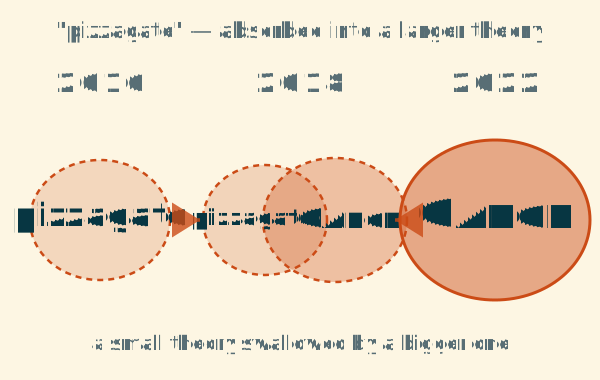
What does it mean for a conspiracy theory to “evolve”? We argue it’s not just new vocabulary — it’s the meaning of existing terms shifting underneath. Across a decade of r/politics discourse (169.9M comments), we use aligned word embeddings to track conspiracy theories as semantic objects, distinguishing real conceptual drift from surface vocabulary churn.

ICWSM ’24

Impact of Audit Methodologies On Understanding YouTube’s Recommendation Systems

Sarmad Chandio, Daniyal Pirwani, Rishab Nithyanand

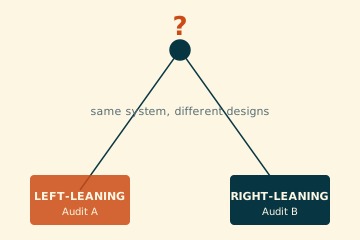
Computational audits of social media websites form the basis of our understanding of algorithmic recommendation systems. However, these audits are not always consistent. Focusing on YouTube, we have evidence supporting that it shows left-leaning recommendations; contrastingly, we also have evidence showing that it is right-leaning. We demonstrate that conducting sock-puppet audits to make specific inferences about the underlying content recommendation system is more methodologically challenging than one might expect, with slight changes in the audit design leading to drastic changes in the findings.

Section II

Talks

Selected presentations and invited talks


Talk listings coming soon. In the meantime, see recent papers for venues where this work has been presented.

Section III

Teaching

Courses taught and mentorship


Teaching listings coming soon. Reach out via email if you’d like to collaborate or chat about coursework.